Innovative Energy Harvesting Solutions for Cyber-Secured Green Buildings

Awarded by: British Embassy in Kuwait/FCDO, UK
Funded Budget: £ 283,800
PI: Dr. Nader Shehata
Co-PI :Dr. Mohamed Trabelsi and Dr. Basil Alothman
 

Project Overview

The Innovative Energy Harvesting Solutions for Cyber-Secured Green Buildings project introduces a hybrid system that merges solar and piezoelectric energy harvesting with secure, IoT-enabled infrastructure. It aims to create self-powered, intelligent buildings that are both energy-efficient and cyber-resilient. With buildings consuming a large share of global energy, and smart technologies introducing new security risks, the project addresses both sustainability and digital protection. Solar energy is complemented by piezoelectric mats that generate power from foot traffic, while a blockchain-based SIEM system ensures secure data flow across devices.

The development of such systems is essential to meet the growing demand for sustainable infrastructure while safeguarding the expanding network of smart technologies. This multidisciplinary approach offers a scalable model for future smart buildings, especially in urban and energy-sensitive environments. Figure 1 showcases the laboratories that supported these developments, including the Solar Room, the Nano & Photonics Laboratory, and the Cybersecurity Unit.

solar The images from left to right show the Solar Room, the Nano & Photonics Laboratory, and the Cybersecurity Unit
 

Approach & Challenges

The project was developed in clear stages, combining smart materials, secure IoT systems, and real-time energy tracking. Team members from different fields worked together to build a strong system that is efficient, sustainable, and secure.

  • Approach
  • The project followed a structured, hands-on development process:

    • Designed hybrid energy harvesting prototypes that combined piezoelectric materials (PVDF, TPU, PZT) with solar panels to capture energy from both motion and sunlight.
    • Integrated IoT components using ESP32 microcontrollers and Firebase, allowing real-time monitoring of voltage levels, footstep counts, and battery status.
    • Built a secure data infrastructure by implementing a lightweight blockchain-based SIEM system for tamper-proof logging and analysis of energy data.
    • Developed a wireless dashboard interface to give users easy access to live system data through a simple and intuitive web platform.
    • Collaborated across different fields, combining knowledge in material science, electronics, software, and cybersecurity to develop the system.
  • Challenges We Overcame
  • Throughout the project, the team tackled several technical and coordination challenges:

    • Handled fragile piezo materials with care, using protective layering techniques to maintain functionality during integration.
    • Managed unstable energy output by designing efficient power regulation circuits to handle fluctuations from piezoelectric sources.
    • Ensured signal compatibility by precisely calibrating communication between sensors, ESP32 microcontrollers, and cloud platforms.
    • Balanced security and performance, optimizing the blockchain-based SIEM system to maintain protection without affecting system speed.
 

Results & Achievements

The Innovative Energy Harvesting Solutions for Cyber-Secured Green Buildings project has demonstrated remarkable interdisciplinary progress across renewable energy, nanotechnology, and cybersecurity. The project yielded several working prototypes, impactful academic output, and meaningful societal contributions (refer Figure 2).

  • Key Technical Achievements
    • Successful Fabrication of Polymeric Piezoelectric Nanomembranes (pure polyvinylidene fluoride (PVDF), PVDF innovatively-integrated with additives such as thermoplastic polyurethane (TPU) and cerium oxide nanoparticles (ceria NPs) via electrospinning technology as multifunctional prototypes that can serve as frequency, tactile, air flow, acoustic sensors and energy harvesters etc.
    • Hybrid Energy Prototypes: Multiple prototypes combining piezoelectric (PVDF/ceramic) and solar technologies were fabricated and tested successfully. A hybrid piezo-solar mat produced 1 Volt of clean energy, enough to charge a LiPo battery and power small devices like LED torches and MP3 players from few thousands of footsteps, along 1 kWH average power generation from our relatively small solar room of dimensions (2 m x 2m x 3m) whose walls are designed via vacuum-glass technology integrated with then-film CdTe solar cells.
    • Fan and Lighting Systems: Step-powered fan controllers and indicator lamps were developed utilizing IoT-enabled temperature and humidity sensors in conjunction with piezoelectric mats, showcasing energy scalability in public-use environments.
    • Acoustic & Tactile Sensing: Novel PVDF/PZT-based nanomats were engineered for acoustic sensing, vibration detection, and airflow monitoring, expanding the application of the technology beyond energy harvesting.
    • nanogenerator

      Innovative Energy Harvesting Technologies: (a) Electrospun Nanogenerator, (b) Hybrid Piezo/ Solar Energy LED Powering, (c) Piezo-steps Battery Charger, (d) IoT-Enabled Step/ PV Fan Powered Controller, (e) Acoustic Wave-Based Power Sensing.

  • Digital & Smart System Achievements:
    • Cybersecurity Systems: A blockchain-based SIEM system was designed and tested for securing greenhouse energy data and smart infrastructure. This system integrated IoT-based footstep piezo sensors with real-time dashboards.
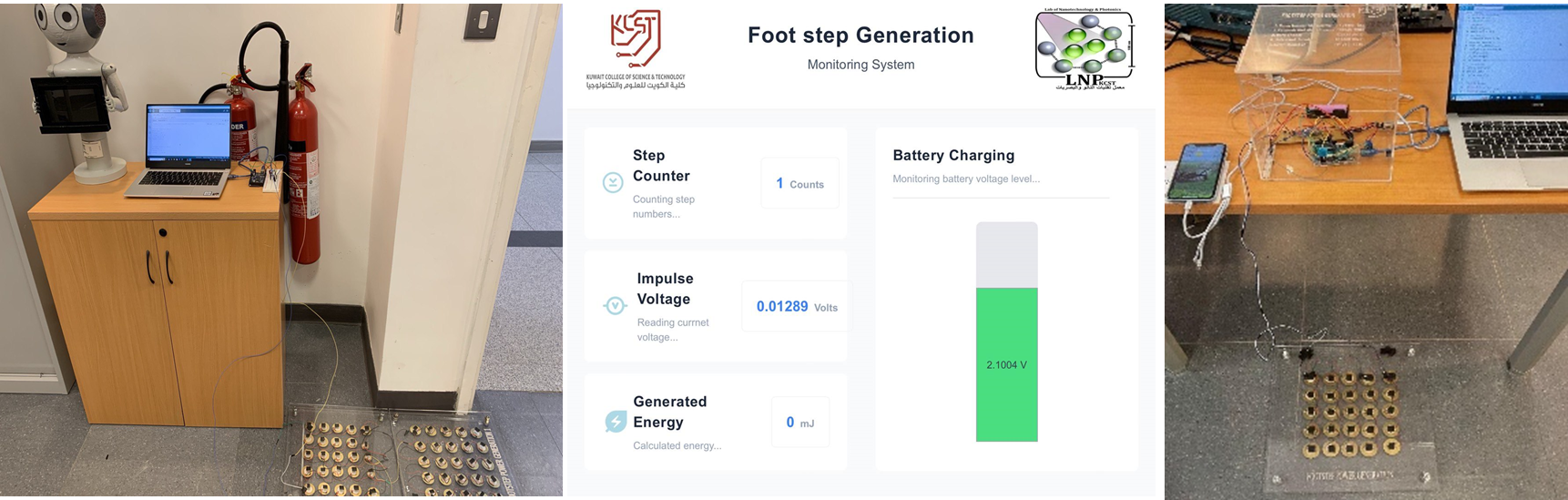
    • Smart Web Application: A live web platform was developed to track voltage, battery levels, and step counts from the piezo mat using Firebase and ESP32, bridging physical energy sources with digital tracking (refer Figure 3).
    • smartweb

      Figure 3: Innovative Systems: (a) Footstep Pathway Energy Harvester, (b) Smart Web Application, and (c) Footstep-Powered Mobile Charging within a Secured System.

    • The research was developed from final year student projects into full smart automation systems, including secure energy use, multi-sensor control, and even the ability to charge a phone using energy from footsteps.
  • Academic and Scientific Output:
    • Publications and Presentations: Over 10 peer-reviewed journal articles (published/under-review), one book chapter, and 10+ conference presentations were produced, many in high-impact platforms across material science, nanotechnology, and smart systems.
    • Recognition and Awards: The project won 1st place at the Arab Youth Summit (UAE) and received best FYP (Final year project) honors at KCST, reflecting the innovation’s public and academic impact. In addition, two “Best Oral Presentation Awards” obtained in International Conferences [ESTSF 2024 & ICAVFP 2024].
    • Researcher Development: The project empowered team members with advanced skills in material science, nanomaterial synthesis, characterization, machine learning, coding, and data analysis, and resulted in the awarding of multiple degrees (including MSc and PhD) among team members.
  • Social and Economic Impact:
    • Enabled new industry-academic collaborations with partners in the UK, Australia, and Egypt, including the initial planning of a solar glass manufacturing production line in one local company in Kuwait.
    • Advanced women participation in STEM, with female researchers leading key innovation streams and presenting at major international conferences
 

Impact & Future Work

The project made significant contributions across multiple domains, reflecting its technical innovation, educational value, and global relevance:

  • Impact Highlights:
    • Developed a hybrid solar–piezoelectric energy system for smart infrastructure.
    • Deployed a blockchain-based SIEM for secure, real-time energy monitoring.
    • Trained students in AI, IoT, and hardware systems, with strong female participation.
    • Published 10+ research journal papers/book chapter/invited talks/conference participation and received multiple awards, including regional and international honors.
    • Collaborated with institutions in the UK, Australia, and MENA on renewable energy research.
  • Future Directions:
    • Adapt system for smart greenhouse irrigation and monitoring.
    • Deploy prototypes in public spaces (hospitals, campuses).
    • Integrate AI for predictive control and energy optimization.
 

Publications

    • Remya Nair, Balram Tripathi, Ankur Jain and Nader Shehata. “Vibrational energy harvesting and tactile sensing applications based on PVDF TPU piezoelectric nanofibers” Journal of Material Science : Materials in electronics, Volume 35, Issue 857, April 2024.
    • Nader Shehata, Remya Nair, Ankur Jain, Mohammed Gamal, Ahmad Hassanin, Sara Noman, Islam Shyha, Krzystof Kruczała, Marwa Saad, Ishac Kandas. Multifaceted Enhancement of Piezoelectricity and Optical Fluorescence in Electrospun PVDF-ceria Nanocomposite, Scientific Reports, April 2025, In press.
    • Remya Nair, Alaa El-kadery, Alaa M. Khalil, Mai.I.El kaliuoby, Ishac Kandas, Ankur Jain, Nada Omran, Mohamed Gamal,Sara Noman, Germein Magdy, Kareem Maree, Ahmed. M. El Khatib, Ahmed Hassanin, Islam Shyha, Soha Jaradat, Ahmed Al- Dubai, Mohamed Trabelsi, Basil Al Othman, Nader Shehata. ”Stretchable electrospun PVDF/TPU nanofibers membranes: Acoustic signals Detectors” MRS Energy & Sustainability, Springer, October 2024.
    • Remya Nair, Jaffer Mahdi, Omar Amjad, Kareem Maree, Ankur Jain, Ahmed Al Dubari, Suha Jaradat, Islam Shyha, Mohamed Trabelsi, Basil Alothamn, Nader Shehata. “Parametric Study on PVDF Electrospun Nanofibers: Optical Characteristics, Piezoelectric Analysis, and Correlated Applications” Journal of Electronic Materials, May 2024.
    • Nader Shehata, Remya Nair . A Book chapter on “Different Characterization and Recent Applications of Piezoelectric Nanofibers” in Second Edition of the book “Energy Harvesting Properties of Electrospun Nanofibers” IOP Publisher, 2024.
    • Remya Nair, Omar Amjad, Ankur Jain. “Airflow sensing and energy harvesting applications of PVDF-TPU piezoelectric nanofibers” Integrated Nano, Scipark publisher, November 2024.
    • Nader Shehata, Remya Nair, Kareem Maree, Mohammed Trabelsi. “Analysis of Post-Treatment Heating of Stretchable Piezoelectric Electrospun Nanofibers” Key Engineering Materials, Scientific.net Publisher, December 2024 .
    • Remya Nair, Nader Shehata, Ankur Jain “Nanoenergy harvesting and air flow sensing applications of PVDF and its composites based piezoelectric nanofibers” Oral presentation in (ESTSF 2024) International Symposium on “ Energy Storage Technologies for Sustainable Future” March 7, 8 2024 ,organized by Suresh Gyan Vihar University, Jaipur , India.
    • Remya Nair, Nader Shehata, Ankur Jain “Mechanical shock-based energy harvesting applications of Electrospun PVDF/TPU nanofibers” Oral Presentation in (ICAVFP-2024) International Conference on Advancements in Various Fields of Physics, organized by Indian Association of Physicists 23rd – 24th November 2024 .
    • Remya Nair, Kareem Maree, Mohammed Trabelsi, and Nader Shehata. “Analysis of Post-Treatment Heating of Stretchable Piezoelectric Electrospun Nanofibers” Oral presentation in 8 th International Conference on Materials Sciences and Nanomaterials (ICMSN), Edinburgh, UK, July 2024.
    • An invited talk on “Piezoelectric Electrospun polymer composites as multifunctional nanomaterials for energy harvesting applications” at POLYMERA 2024 – International Conference on Recent Advances in Polymer Science: Synthesis , Processing and Applications , held at School of Polymer Science & Technology, Mahatma Gandhi University , Kottayam, India during 01 – 04 December 2024, jointly organized by MG University Kottayam & IIT Kharagpur.
    • Remya Nair, Dania Abdelsamie, Nader Shehata.“Piezoelectric Nanofiber Energy harvesting for IoT-enabled Assistive Technologies” Oral Presentation in International Conference and Forum on Assistive Technologies for Special Needs” (ATSN 2024) held at KCST on December 9-10, 2024 .
    • Dania Husni, Fatemah Abuelhassan, Remya Nair, Zainab Abulehassan, Nader Shehata, Review of Secure and Efficient Energy Management Systems in Greenhouses”, S4IOT symposnium held at KCST (7th -8th May 2024).
    • Dania Husni, Fatemah Abuelhassan, Remya Nair, Zainab Abulehassan, Nader Shehata, Piezoelectric-Driven IoT Automation for Industrial & Smart Building Emissions Control, 2nd Symposium on Smart, Sustainable, Secure Internet of Things (S4IoT’25), KCST, May 2025.
 

Events and Awards

    • Best Oral Presentation Award in ESTSF 2024 International Symposium on “ Energy Storage Technologies for Sustainable Future” March 7, 8 2024 held in Suresh Gyan Vihar University, Jaipur , India.
    • Best Oral Presentation Award in 1st AIP International Conference on Advancements on Various Fields of Physics (ICAVFP-2024), Organized by Association of Indian Physicists (AIP) with Janardan Singh Foundation on November 23-24, 2024.
    • University of Sharja UAE, First Place – Multidisciplinary Technology Field, Dec 2024: Arab Youth Summit for Innovation and Sustainability, held at the University of Sharjah in partnership with ALECSO, representing Kuwait among representatives from across the Arab world. At the summit, engineer Dania Hossny presented our research work conducted at KCST’s Lab of Nanotechnology and Photonics, showcasing the project “Cybersecured Footstep Piezoelectric Energy Harvesting.” during both poster sessions and conference presentations. Professors and specialists from various countries expressed great admiration for the sophistication of our work. The project was ranked among the top 10 best projects at the summit and earned first place in the field of multidisciplinary technology, recognized for its complexity and impact.
    • Second Kuwait Hackathon, Nov 2024: Organized by H.H. Sheikh Salem Al Ali Al Sabah Informatics Award and hosted at the Kuwait innovation center. Our final-year project conducted at KCST’s Lab, Footstep Piezoelectric Energy Harvesting, was shortlisted among the top 20 groups from over 80 participating teams at Kuwait College of Science and Technology. It aims to develop a sustainable energy solution to tackle the global energy crisis. Each step taken on our system generates electricity, demonstrated at a hackathon by lighting a lamppost as an indicator. The project aims to secure 10% of daily power consumption needs through footstep energy harvesting.
    • Ghabgathon, Apr 2024: Blockchain-Based Intrusion Detection System As part of a collaborative team participated by Eng. Fatma Abou Elhassan & Eng. Dania Hosnny, we secured 2nd Place in the Ghabagathon for developing a Blockchain-based Intrusion Detection System (IDS). Our system, designed to enhance network security, utilized blockchain technology to create a decentralized and tamper-proof framework, ensuring high levels of data integrity and protection against cyber threats, similar to a Security Information and Event Management (SIEM) system.
 

Media Coverage

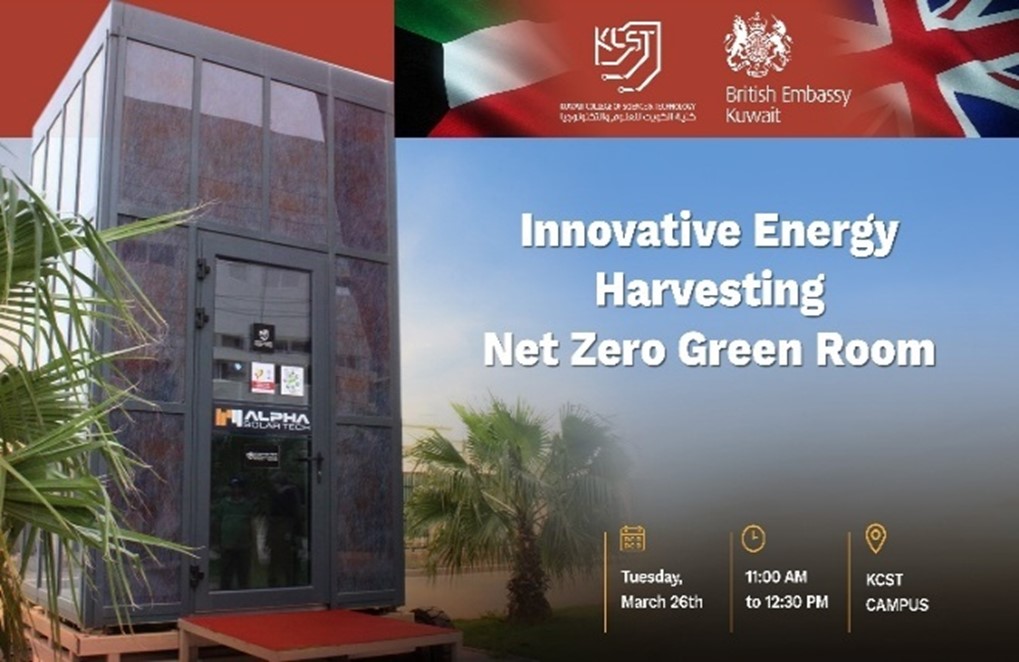
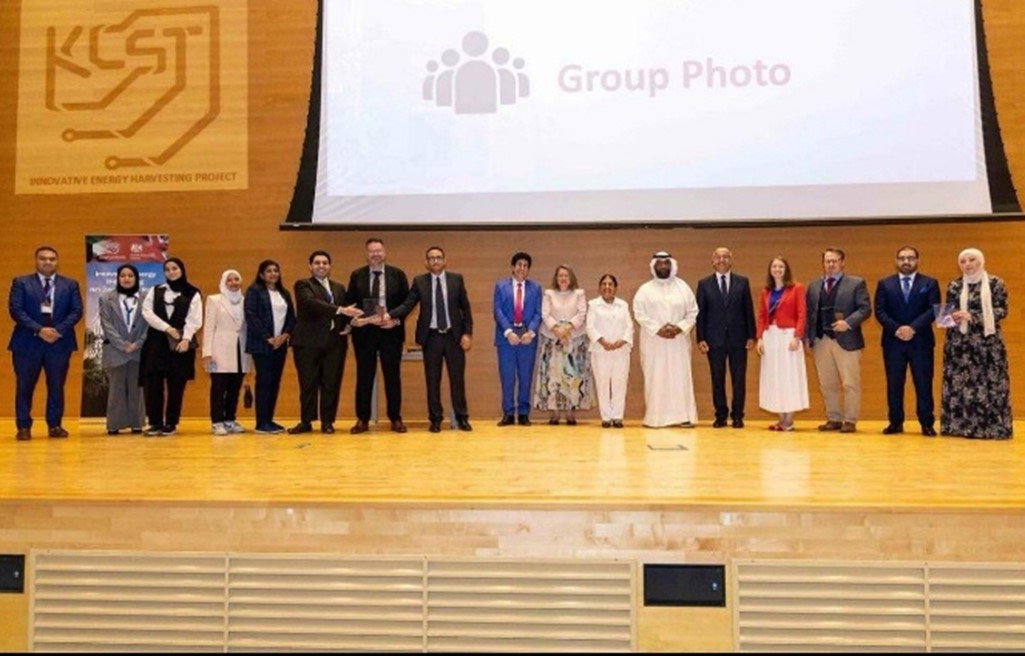
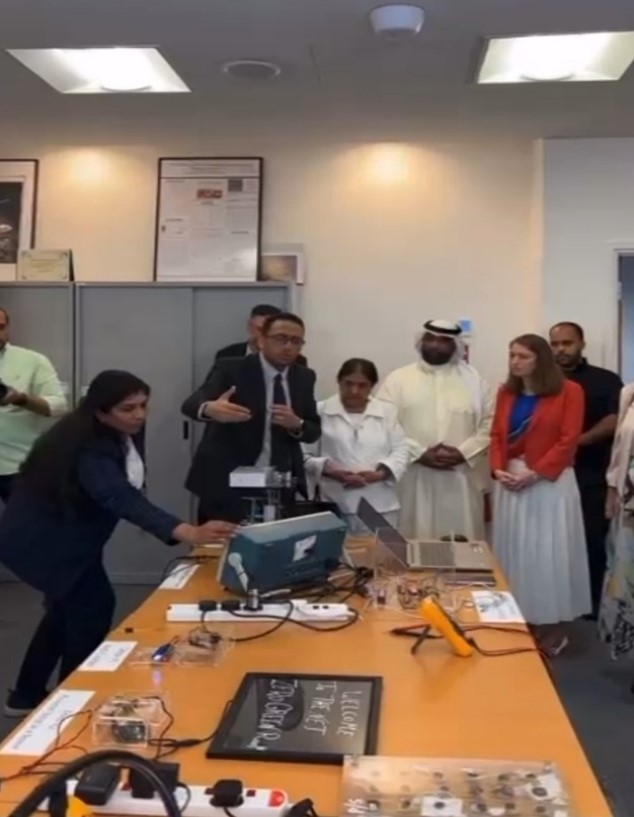
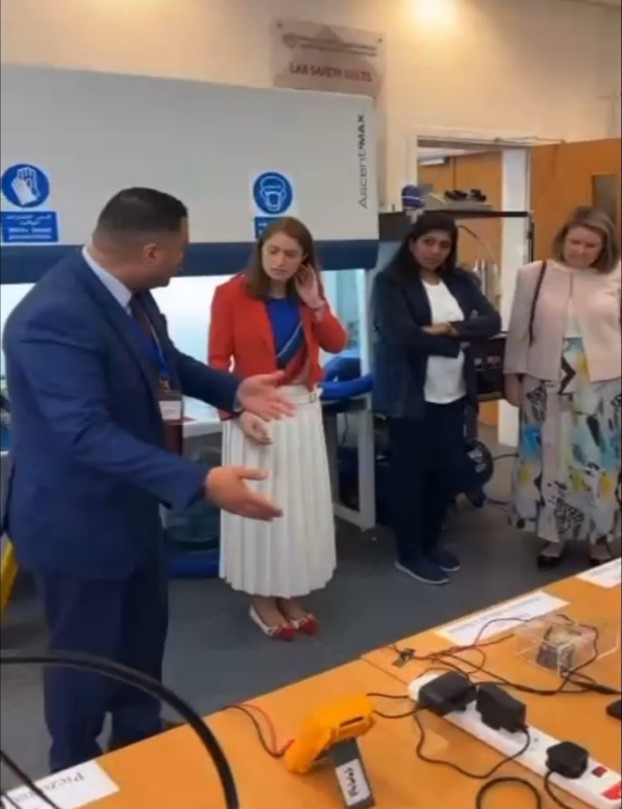
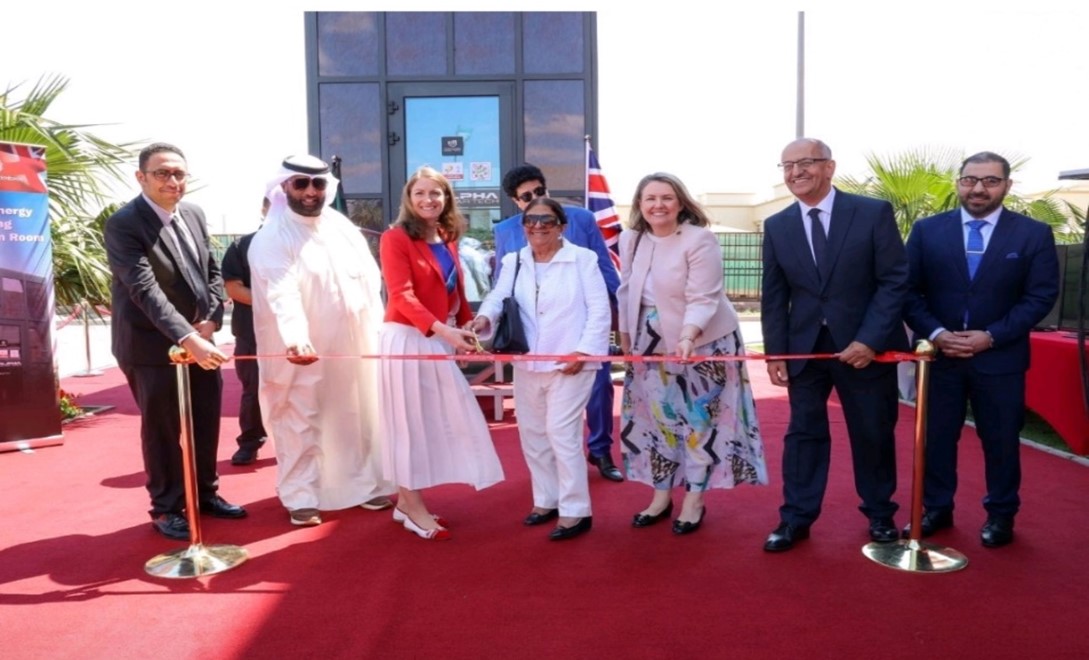
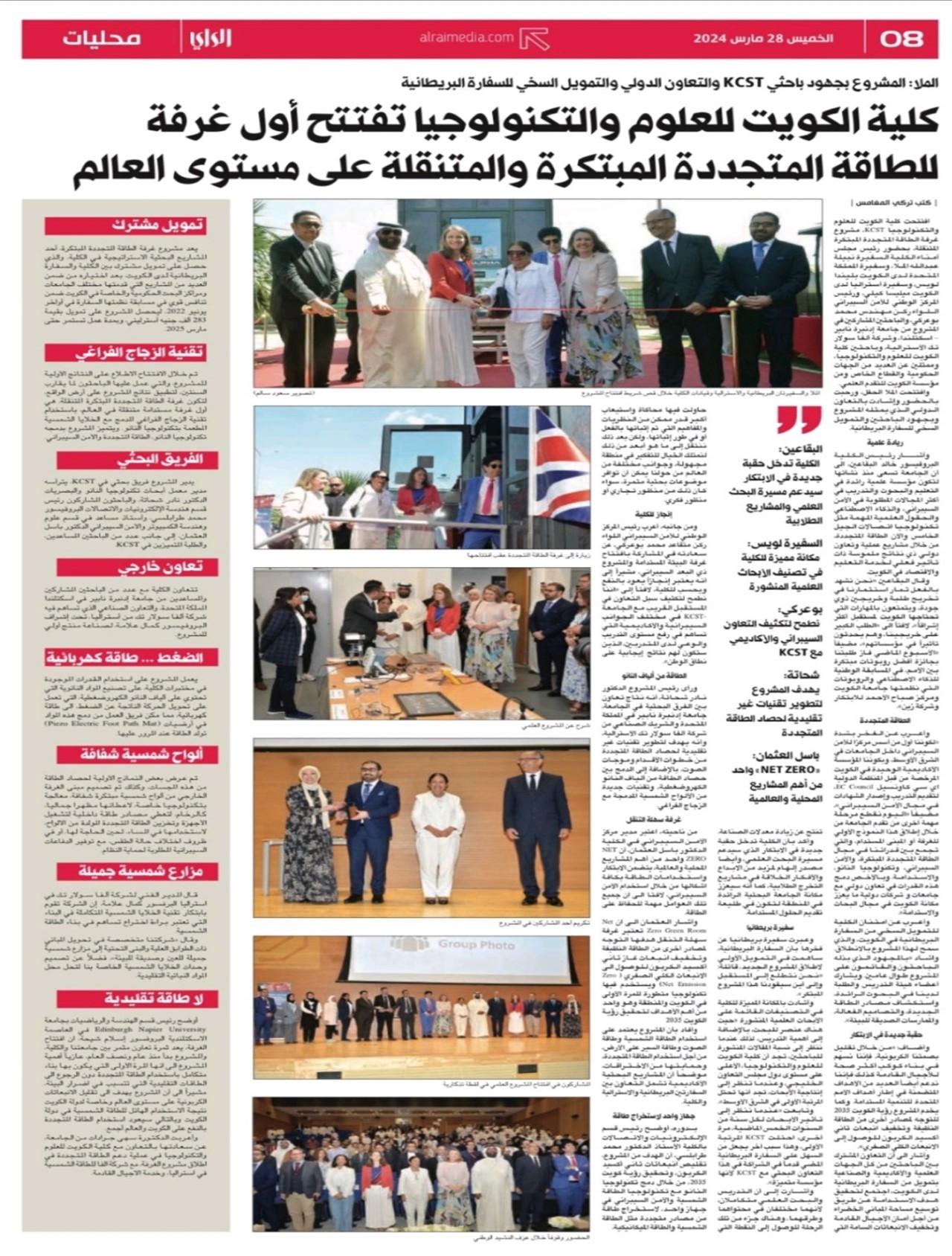
Our organized event of solar room opening held in March 2024, that was held at KCST and attended by the UK Ambassador in Kuwait, Australian Ambassador in Kuwait, Chairman of National Security Council of Kuwait, owners of KCST, and a lot of academic and industrial collaborators and audience, spread the awareness of new technologies that we are introducing to the Kuwaiti society. Indicators include encouragement of at least five undergraduates and research assistants to participate in our project after this successful event, along with being covered by two biggest media newspapers in Kuwait (Al-Rai and Al-Jarida).

media1 media2

media3
media4
media5

Photos of the organized event of the official opening of innovative vacuum-solar glass demo at KCST.

media5

An example to the media coverage of the event held at KCST in March 2024.